From Scarcity to Innovation: Amniotic Membrane as a Viable Alternative to Cadaveric Skin in a Sri Lankan Burns Unit

https://doi.org/10.65989/662648ontrbe
Abstract
Introduction: Managing extensive thermal injuries in resource-limited settings presents profound clinical challenges due to the critical scarcity of autologous donor sites and the fluctuating availability of cadaveric skin. Human amniotic membrane (HAM)
serves as a crucial, innovative biological bridge in developing healthcare systems.
Case presentation: We report three female patients (ages 24, 35, and 40) with severe burn injuries ranging from 15% to 55% total body surface area (TBSA).
Surgical management included early tangential excision combined with HAM application, alongside cadaveric skin and keratinocyte transfers in select cases. Clinical courses were complicated by severe sepsis, multi-organ failure, and adverse drug reactions
(DRESS syndrome). Management required rigorous antimicrobial stewardship—auditing treatment durations for precise compliance with microbiological sensitivities. While the 55% TBSA patient demonstrated excellent local wound healing with HAM but ultimately succumbed to systemic sepsis, the remaining two patients achieved successful wound closure and survived complex systemic and local infections.
Discussion: The integration of HAM provides highly viable, cost-effective biological dressing. It accelerates wound healing, controls fluid loss, and prepares the wound bed, yielding outcomes comparable to advanced bioengineered skin substitutes.
Conclusion: HAM serves as an essential alternative to traditional skin substitutes in resource-constrained global burn units, effectively providing temporary physiological wound closure, though it cannot completely avert the mortality risks of profound
systemic sepsis in massive burns.
Article
Introduction
The rapid reconstruction and coverage of massive soft-tissue defects following thermal injury demand aggressive surgical strategies. In patients with significant burns, autologous donor sites are often scarce or compromised by localized infections. Early tangential excision must be followed by immediate biological coverage to halt fluid loss, prevent heat loss, and mitigate burn wound sepsis. In Sri Lankan burn units, where the availability of cadaveric skin banks can fluctuate, human amniotic membrane (HAM) serves as a critical, innovative alternative. This case series examines three distinct clinical scenarios where HAM was utilized to provide temporary physiological wound closure and salvage compromised grafts until definitive healing could occur.
Case Presentation
Case 1
A 35-year-old female sustained a 55% TBSA kerosene burn injury involving the face, neck, upper chest, and back, complicated by suspected inhalation injury. Following initial resuscitation, she was transferred to the intensive care unit. On post-burn day (PBD) 3, she underwent platysmectomy and tangential burn excision. Due to profound donor skin limitations, coverage was achieved using cadaveric split-thickness skin grafts alongside a HAM transfer. A subsequent burn wound excision with cultured keratinocyte transfer was performed on post-operative day (POD) 9. Her intensive care course was complicated by severe hypoalbuminemia and sepsis. To ensure appropriate compliance with medical guidelines, her antimicrobial therapy was strictly audited, completing a targeted 6-day course of intravenous Piperacillin-Tazobactam. While her extensive wounds demonstrated excellent adherence and healing under the biological dressings, her systemic condition deteriorated. Despite aggressive critical care, she ultimately passed away due to overwhelming sepsis and multi-organ failure.
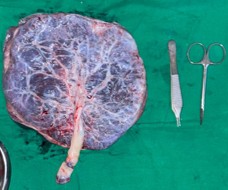
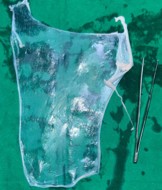
Figure 1: (A) Gross appearance of the human placenta. (B) Harvested human amniotic membrane (HAM) prepared for use as a biological dressing.
Case 2
A 40-year-old female presented with a 15% TBSA hot water burn injury. On PBD 12, following burn wound excision and split-thickness skin grafting to bilateral thighs, she experienced profound graft failure secondary to a Pseudomonas infection. Her clinical picture was further complicated by non-oliguric acute kidney injury (AKI) and the development of DRESS syndrome (Drug Reaction with Eosinophilia and Systemic Symptoms). To salvage the wound bed and promote re-epithelialization, HAM was applied. Her DRESS syndrome was managed with a tapering course of oral prednisolone under strict dermatological follow-up. To ensure optimal antibiotic stewardship and minimize systemic toxicity, her regimen was carefully audited; she completed a targeted 7-day course of intravenous Clindamycin and a 9-day course of Meropenem to clear the localized infection. By PBD 108, the donor site and burn wounds had successfully healed, and she was transitioned to topical gel dressings with stable glycemic control.
Case 3
A 24-year-old female presented following a 42% TBSA self-inflicted flame burn. During her surgical management, she received an application of HAM combined with a keratinocyte spray, followed by burn wound excision and skin grafting to bilateral breasts. Her recovery was initially complicated by severe breast engorgement, managed successfully with manual expression and a stat dose of cabergoline. Her clinical course was dominated by recurrent, complex sepsis requiring dynamic antimicrobial management driven by strict clinical auditing and microbiological guidelines. An initial empiric regimen of intravenous Meropenem and Teicoplanin was audited and ceased at day 10 upon microbiological review. Subsequent fever spikes revealed Klebsiella bacteremia, prompting targeted intravenous Colistin therapy. A later blood culture on PBD 42 returned positive for Gram-positive cocci; adhering to microbiological stewardship principles, Colistin was immediately omitted and Vancomycin was initiated. Comprehensive systemic screening ruled out embolic seeding. She was successfully stabilized, cleared of bacteremia, and continued on routine psychiatric follow-up.
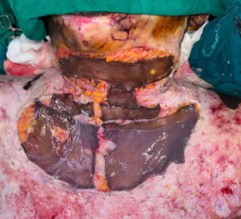
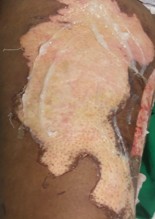
Figure 2: Intraoperative application of human amniotic membrane (HAM) as a biological dressing over the excised burn wound bed.
Discussion
The management of severe burns in resource-constrained settings necessitates innovative approaches to wound coverage. Current literature strongly supports the use of human amniotic membrane as a primary or adjunctive biological dressing across varied clinical presentations—from massive TBSA coverage to localized graft salvage.
Recent robust analyses confirm that HAM is highly efficacious in burn care, yielding wound healing outcomes comparable to other advanced bioengineered skin substitutes. Furthermore, the novel application of amniotic bilayer dressings co-cultured with keratinocytes has shown significant promise as a definitive skin substitute in adult burn patients, closely mirroring the combined techniques utilized in Cases 1 and 3 of this series. Comprehensive reviews reinforce HAM’s critical role in the immediate management of burn wounds, noting its ability to reduce exudate, control localized Pseudomonas colonization (as seen in Case 2), and prepare the wound bed.
Studies validate the efficacy and feasibility of HAM across various burn presentations, noting its distinct benefits in accelerating healing when used alongside conventional treatments. Research into cell-based substitutes and HAM has consistently demonstrated their ability to accelerate regeneration, act as a potent graft fixator, and reduce overall donor site morbidity. Ultimately, HAM serves as a highly effective and accessible alternative to synthetic membranes in environments where traditional allografts are unavailable.
Conclusion
The integration of human amniotic membrane provides a reliable, innovative bridge to definitive coverage in severe thermal injuries and compromised graft sites. This case series demonstrates that HAM effectively controls local infection and promotes epithelialization, offering a highly practical solution to the scarcity of donor skin in Sri Lankan burns units. However, while HAM is a vital tool for local wound control, it cannot completely avert the profound mortality risks associated with systemic sepsis and multi-organ failure in massive burns.
Patient Consent
Written informed consent was obtained from the surviving patients and the next of kin of the deceased patient for the publication of this case series.
Ethical Approval
Formal ethical approval was not required for this case report in accordance with institutional policy.
Funding
No funding was received for this study.
Conflict of Interest
The authors declare no conflicts of interest.
References
- Putri NM, Wardhana A, Sandora N, Syarif AN, Farhana N, Oklia S. Analyzing The Efficacy and Outcome of Amniotic Membrane in Burn Care: A Systematic Review and Meta-Analysis. Jurnal Plastik Rekonstruksi. 2025. https://doi.org/10.14228/jprjournal.v12i1.384
- Putri NM, Wardhana A, Sukasah CL, et al. A novel use of amniotic bilayer dressing co-cultured with keratinocytes and stem cell as skin substitute in adult burn patients. Annals of Burns and Fire Disasters. 2025;38(1):46-52.
- Tobin MJ, Mustoe AK, Nickman S, et al. Comparing Amniotic Membranes to Other Bioengineered Skin Substitutes in Wound Healing: A Propensity Score-Matched Analysis. Journal of Clinical Medicine. 2025;14. https://doi.org/10.3390/jcm14124272
- Gómez CC, Román EB, Ibarra DAM, Arzac RM, Treviño AR. Case Report and Review of the Literature: Human Amniotic Membrane in the Management of Burn Wounds. Journal on Surgery. 2024. https://doi.org/10.52768/2691-7785/1141
- Pfister P, Wendel-Garcia P, Meneau I, et al. Human amniotic membranes as an allogenic biological dressing for the treatment of burn wounds: Protocol for a randomized-controlled study. Contemporary Clinical Trials Communications. 2023;36. https://doi.org/10.1016/j.conctc.2023.101209
- Hatzfeld A, Pasquesoone L, Germain N, et al. Benefits of cryopreserved human amniotic membranes in association with conventional treatments in the management of full‐thickness burns. International Wound Journal. 2019;16:1354-1364. https://doi.org/10.1111/iwj.13198
- Mohammadi A, Eskandari S, Johari HG, Rajabnejad A. Using Amniotic Membrane as a Novel Method to Reduce Post-burn Hypertrophic Scar Formation: A Prospective Follow-up Study. Journal of Cutaneous and Aesthetic Surgery. 2017;10:13-17. https://doi.org/10.4103/jcas.jcas_109_16
- Salehi SH, As’Adi K, Mousavi S, Shoar S. Evaluation of Amniotic Membrane Effectiveness in Skin Graft Donor Site Dressing in Burn Patients. Indian Journal of Surgery. 2015;77:427-431. https://doi.org/10.1007/s12262-013-0864-x
- Kesting M, Wolff K, Hohlweg-Majert B, Steinstraesser L. The Role of Allogenic Amniotic Membrane in Burn Treatment. Journal of Burn Care & Research. 2008;29:907-916. https://doi.org/10.1097/bcr.0b013e31818b9e40