
Surgical Correction of Tuberous Breast Deformity: Refining Technique for Optimal Aesthetic Outcomes

https://doi.org/10.65989/968795odensp
Article
Introduction
Tuberous breast deformity is a rare congenital deformity characterized by abnormal breast development, often presented in the pubertal age. The hallmark feature of this deformity is changes in the breast morphology. It can present as both unilateral or bilateral and symmetric or asymmetric, which can lead to psychological distress in the patient, particularly due to the appearance of the breasts. Tuberous breast deformity has been graded using numerous classifications by clinicians. The Von- Heignburg system, originally a four-type system, is based on which breast quadrants are deficient and the degree of skin and breast base constriction. The Grolleau system is a simplified three-type classification. Both system helps plastic surgeons assess the severity of the deformity and plan the most effective surgical approach.We have used the Grolleau classification in our study.
- Type I: hypoplasia of the lower medial quadrant. This is the most common type.
- Type II: bilateral hypoplasia of the lower quadrants. The subareolar cutaneous segment is short, and the areola points downward.
- Type III: hypoplasia of all four quadrants and constriction of the breast base both horizontally and vertically.
The pathophysiology behind tuberous breast deformity involves malformation in the superficial layer of Camper’s fascia, which is found beneath the areola, which is lacking, and thickened superficial fascia, particularly in the breast’s lower pole. Its normal development is altered by the constricting ring that surrounds the nipple-areola complex (NAC) in tuberous breasts. As a result, the breast cannot grow toward the lower pole. Because of the weak spot created at the areola level by the lack of this fascial layer, the growing breast can herniate towards the NAC [2]. The deformity can be corrected by reconstructive surgery. The reconstructive difficulty of this deformity is reflected in the various surgical approaches described to increase the volume of the breasts in the lower pole of the breast [3]. The techniques typically focus on expanding the lower breast pole improving symmetry, and repositioning the NAC, but the complexity of the surgery varies depending on the severity of the deformity.
In cases of Type III deformities, a more extensive procedure may be required to address the significant constriction and hypoplasia across all quadrants of the breast. The lack of uniformity in the presentation of tuberous breast deformity compounds reconstructive challenges, making individualised treatment plans essential. The diverse surgical methods available reflect the need for tailored interventions that take into account each patient’s specific characteristics and the severity of the deformity. These can range from simple augmentation to more complex tissue rearrangement, including nipple-areola complex repositioning, glandular tissue release, and sometimes fat grafting or implant insertion to restore volume and symmetry [3]. Despite the complexities, advances in surgical techniques have significantly improved outcomes, helping individuals with tuberous breasts achieve better aesthetic results and, importantly, higher self-esteem.
Case Presentation
A 13-year-old girl was referred to the plastic and reconstructive surgery clinic of a tertiary care center from the paediatric surgery clinic with a complaint of bilateral asymmetric breast contour for the past 2 years as noticed by the mother. The patient had no other complaints like breast lumps, pain, or secretions. She had undergone a polydactyly removal at 8 months of age and a laparoscopic appendicectomy in 2021. Her past medical history is significant for bronchial asthma, which is poorly controlled and requires frequent hospitalizations. She attained menarche at the age of 10, and she is currently having a regular menstrual cycle with no complaints. Her birth and developmental history were insignificant. There is no family history of tuberous breast disease, breast cancer, or bone tumors.
Her physical examination showed bilateral hypoplastic breasts, a herniated enlarged areola, an undeveloped lower pole, and a poorly defined fold. The right breast was Grolleau classification type 2, and the left was type 3 (figure 1).

Figure 1 : Preoperative Appearance
Ultrasound of the breast revealed a bilateral asymmetric distribution of fibro-glandular tissues of the breasts. No mass lesions, axillary lymphadenopathy, or changes in the nipple-areolar complex were observed. The surgical reconstruction was performed under general anaesthesia. A doughnut-shaped incision was made around the areola, adjusting the nipple-areolar complex size (NAC). De-epithelialization of the skin was done in between the incisions. Any constriction bands were removed, and breast tissue herniated into the NAC was relocated. The skin was sutured using 3/0 barbed monocryl sutures. A good cosmetic result was achieved on the table (figure 2).
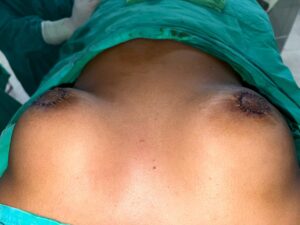
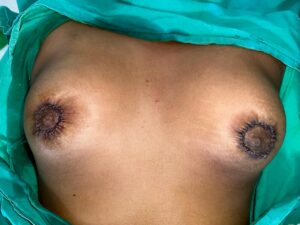
Figure 2 :Immediate Postoperative appearance
The patient presented with a relapse 2 months later which was surgically corrected. There is a possibility of relapse but it can be revised using a smaller surgery. However this technique is limited to breasts with relatively normal tissue architecture rather than extremely hypoplastic breasts. Later on the patient presented with areolar stretching which was corrected surgically by a short procedure.
Discussion
Several studies have evaluated different surgical techniques for correcting tuberous breast deformity, with varying approaches and outcomes. A study in Spain assessed the use of the modified Puckett’s technique with a double unfolded subareolar glandular flap on 42 breasts in 26 patients over 12 years. This technique, performed via a periareolar incision, demonstrated high rates of complete correction. The advantages of this approach include restoration of the lower breast pole, reduction of the “double-bubble” effect, correction of the inframammary fold, and improvement in areola size and herniation [3].
A retrospective study from St. Petersburg State Pediatric Medical University evaluated 208 patients (414 breasts) treated between 2005 and 2017 using breast parenchyma modification with simultaneous augmentation. The technique included periareolar incisions, vertical and horizontal glandular scoring, dual-plane pocket creation, and anatomical implants. The complication rate was 8.9%, with 1.4% capsular contracture and 2% “double bubble” deformity. The study concluded that this one-stage approach minimizes complications and provides satisfactory outcomes [4].
A study from September 2006 to December 2015 followed 78 patients (145 breasts) who underwent surgical correction using periareolar approaches and adipose-glandular flaps with dual-plane breast implant placement. The complication rate was low, with 6.4% of patients experiencing minor issues like capsular contracture or hypoesthesia. No major complications like necrosis or poor wound healing were reported, indicating a successful, low-risk technique [5]. Another retrospective study at the Icahn School of Medicine (2008–2012) included 26 patients (51 breasts) treated with periareolar access, glandular scoring, and subpectoral implants. The overall complication rate was 7.8%, with capsular contracture and malposition as the primary issues. The study found satisfactory results with individualised mastopexy techniques based on the type of deformity [6].
Several studies have explored autologous fat transfer for TBD correction, particularly in young patients. A study on 10 patients (mean age 17.5 years) using lipofilling showed stable results over an average follow-up of 68 months, with no significant complications other than one case of oil cysts. The technique was deemed effective, particularly for minimising scarring. Another study with 31 patients showed a 94% success rate over 11 years, indicating fat grafting as a reliable and lasting alternative to traditional surgery [7][8]. A study comparing patient satisfaction between breast implants and autologous fat grafting found that breast implants resulted in significantly higher satisfaction rates. The lipofilling group required more interventions to achieve satisfactory results, highlighting breast implants as a more consistent and preferred option for tuberous breast correction [9].
Conclusion
Tuberous breast deformities exhibit significant variability, even between the two breasts of the same patient. As a result, a single surgical approach may not be suitable for both breasts. Although there is a well-established classification system for tuberous breast deformity, there is no standardization in surgical techniques. Various methods are described in the literature, but consensus on the best approach for long-term outcomes remains lacking. Breast implants and autologous fat grafting are the most commonly used. In young patients with sufficient breast volume, the doughnut and purse-string techniques have shown success in repositioning the breast tissue within the chest wall. However, over time, there is a risk of stretching or expansion of the nipple-areola complex. In such cases, revision surgery to adjust the areola size may be necessary. Typically, a 10-year follow-up is recommended after correction of tuberous breast deformities to assess long-term results.
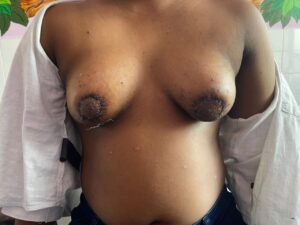
Figure 3: Post Operative appearance
Declarations
None
ORCID
Gayan Ekanayake https://orcid.org/0000-0001-8420-7073
Dishan Samarathunge https://orcid.org/0000-0002-4407-7021
Hasod Abeyasinghe https://orcid.org/0009-0005-0159-2831
Ethics approval and consent to participate
Not applicable
Consent for publication
Informed written consent for publication and accompanying images was obtained from the patients prior to collecting information.
Availability of data and material
All data generated or analyzed during this study are included in this published article.
Competing interests
The authors declare that they have no competing interests.
Funding
The authors received no financial support for the research, authorship, and/or publication of this article.
References
References
- Grella, Roberto MD, PhD; D’Andrea, Francesco MD, PhD; Nicoletti, Giovanni Francesco MD, PhD; Lanzano, Giuseppe MD. Tuberous Breast Management: A Review of Literature and Novel Technique Refinements. Plastic and Reconstructive Surgery – Global Open 10(12):p e4708, December 2022. | DOI: 10.1097/GOX.0000000000004708
- Jose Maria Serra-Renom; Juan Muñoz-Olmo; Jose Maria Serra-Mestre. (2011). Treatment of Grade 3 Tuberous Breasts with Puckett’s Technique (Modified) and Fat Grafting to Correct the Constricting Ring. , 35(5), 773–781. doi:10.1007/s00266-011-9686-z
- Oroz-Torres, Javier; Pelay-Ruata, María-Josefa; Escolán-Gonzalvo, Nieves; Jordán-Palomar, Elena . (2014). Correction of Tuberous Breasts Using the Unfolded Subareolar Gland Flap. Aesthetic Plastic Surgery, 38(4), 692–703. doi:10.1007/s00266-014-0340-4
- Zholtikov, Vitaly; Korableva, Natalya; Lebedeva, Julia . (2018). Tuberous Breast Deformity Correction: 12-year Experience. Aesthetic Plastic Surgery, (), –. doi:10.1007/s00266-018-1261-4
- Innocenti, Alessandro; Innocenti, Marco; Mori, Francesco; Melita, Dario; Ciancio, Francesco; Cordova, Adriana . (2017). Tuberous Breast. Annals of Plastic Surgery, (), 1–. doi:10.1097/SAP.00000000000012
- Kolker, Adam R.; Collins, Meredith S. . (2015). Tuberous Breast Deformity. Plastic and Reconstructive Surgery, 135(1), 73–86. doi:10.1097/PRS.00000000000008
- Derder, Mohamed; Whitaker, Iain S.; Boudana, David; Marchac, Alexandre; Hivelin, Mikael; Mattar, Nadia; Lepage, Christophe; Claude, Olivier; Benjoar, Marc-David; Bosc, Romain; Lantieri, Laurent . (2014). The Use of Lipofilling to Treat Congenital Hypoplastic Breast Anomalies. Annals of Plastic Surgery, 73(4), 371–377. doi:10.1097/sap.0b013e31827fb3
- Delay, E.; Sinna, R.; Ho Quoc, C. . (2013). Tuberous Breast Correction by Fat Grafting. Aesthetic Surgery Journal, 33(4), 522–528. doi:10.1177/1090820X13480641
- Brault, Nicolas; Stivala, Alessio; Guillier, David; Moris, Vivien; Revol, Marc; François, Caroline; Cristofari, Sarra . (2017). Correction of tuberous breast deformity: A retrospective study comparing lipofilling versus breast implant augmentation. Journal of Plastic, Reconstructive & Aesthetic Surgery, 70(5), 585–595. doi:10.1016/j.bjps.2017.02.011